
The Latino Consumer Federation (LCF) today released its inaugural State of the Latino Consumer in California, a first-of-its-kind statewide survey designed to assess the economic concerns, consumer attitudes, and institutional trust levels among self-identified Latino Californians.
The survey finds that Latino consumers in California face significant financial challenges, feel overlooked by major institutions, and seek greater recognition not just as a political group but as one of the state's most important consumer segments. The LCF launched this initiative to address what it describes as a major gap in California public life: a lack of continuous, data-driven research focused specifically on Latino consumers, rather than merely categorizing them as a subgroup in broader polling.
Among the survey's most significant findings:
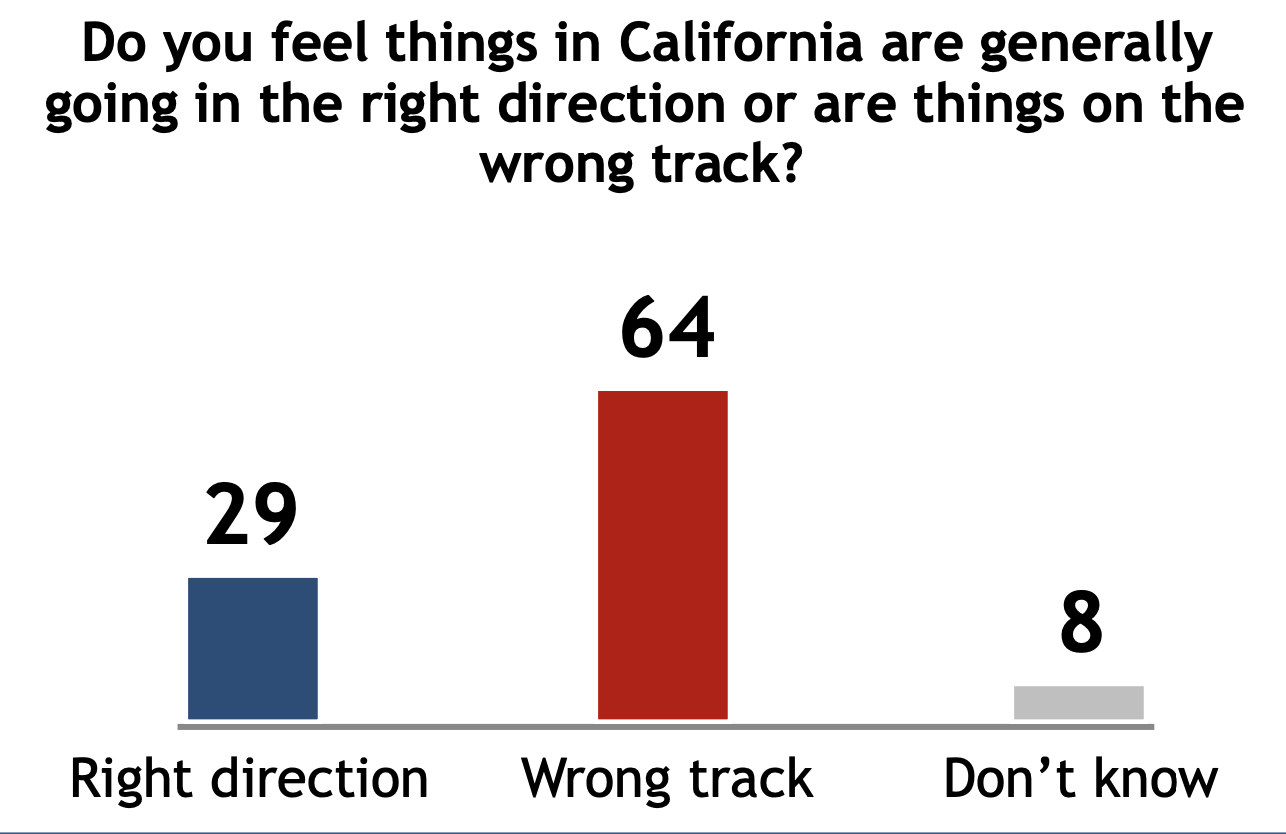
- 64% say California is on the wrong track, and 68% say the state's economy is on the wrong track.
- 95% say the cost of insurance is a concern, 94% cite the cost of food and groceries, 93% cite the cost of housing, and 93% cite the cost of electricity and utilities.
- 75% agree that organizations claiming to speak for Latinos do not really reflect people like them.
- 69% say the Latino community should receive more focus from businesses, while 78% say it should receive more focus from elected officials.
- 70% say corporations often take advantage of Latino consumers, and 73% say corporations often take advantage of Latino employees.
- Just 23% trust large corporations to act in the best interests of Latino consumers, compared to 74% who trust small businesses.
"This survey confirms what Latino families across California experience every day," stated Michael Bustamante, founder and CEO of the Latino Consumer Federation. "Latinos are central to California's economy, but too often they are treated as an afterthought by corporations, policymakers, and even organizations that claim to speak on their behalf."
The survey depicts widespread financial stress among households. Only 47% consider themselves financially secure, 43% say they are worse off than a year ago, 66% have less than enough savings or none at all, and 79% say inflation has led them to buy cheaper food. Additionally, 75% believe their children or grandchildren will never afford to buy a home in California.
"Latino consumers are sending a crystal clear message," said David Binder of David Binder Research. "These findings show an electorate and consumer community under real economic stress, but also one that feels underrepresented and underserved."
ICE raids directly influence consumer behavior, mobility, comfort in public spaces, and trust in institutions.
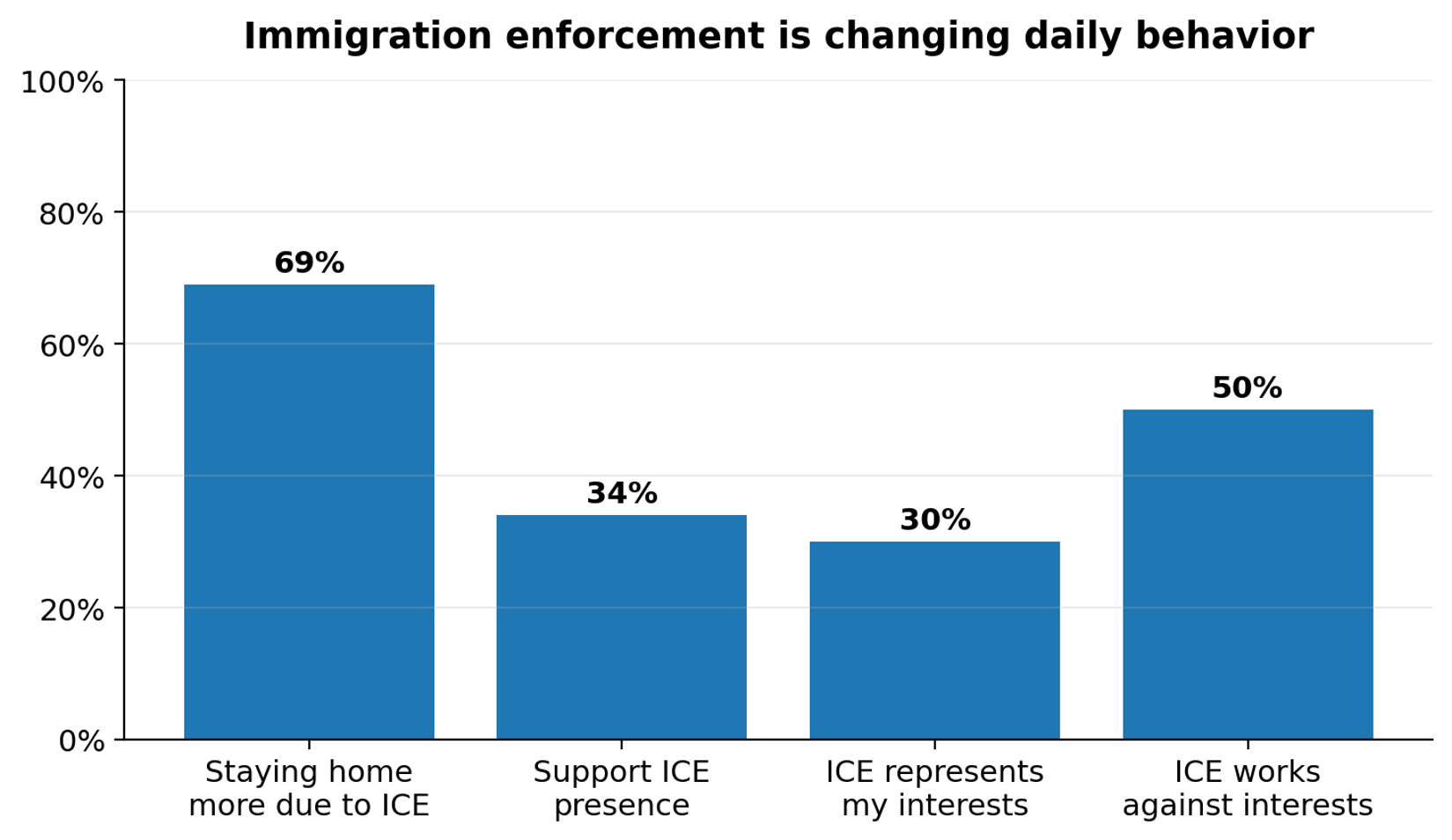
The survey also found that immigration enforcement has a real and measurable impact on the daily lives of many Latino consumers in California. Nearly 7 in 10 respondents (69%) agreed that, because of the potential presence of ICE, they have been staying home more often, while only 34% said they support the presence of ICE and increased law enforcement throughout their area and in California.
Additionally, just 30% said ICE represents their interests, whereas 50% said it works against their interests. These findings highlight that immigration policy is more than just a political issue.
Latino consumers oppose a proposed $1 delivery tax in the City of Los Angeles, and 77% oppose a mileage tax on drivers being discussed in Sacramento.
The poll also found that 42% of respondents favor less strict government regulation and oversight, compared to 36% who favor stricter regulation, while 61% oppose a new $1 delivery tax and 77% oppose a mileage tax on drivers. These results indicate that Latino consumers are highly sensitive to policies that could increase everyday costs, especially when affordability is already a major household concern.
According to LCF, the State of the Latino Consumer aims to become an annual benchmark and a practical tool for decision-makers in government, business, media, and advocacy. The organization's founding memo described the project as an effort to establish a baseline of Latino consumer sentiment on the economy, politics, financial services, and immigration, and to provide actionable intelligence that helps leaders better understand and engage California's largest ethnic group and one of its most influential consumer segments.
Survey Methodology
The survey interviewed 800 self-identified Latinos in California from February 18 through February 23, 2026. Interviews were conducted in English and Spanish using a Random Digit Dialing methodology with a mix of phone, text, and online contacts. The survey has a margin of error of ±3.5%.
About the Latino Consumer Federation
The Latino Consumer Federation is a 501(c)(4) education and advocacy organization created to elevate understanding of Latino consumer attitudes, economic concerns, and policy priorities. LCF's goal is to provide policymakers, business leaders, journalists, and advocates with credible, timely data on the real-world experiences shaping Latino consumers in California.